🌸 Easter Special: Switzerland Visa Slots Filling Fast – Apply Now
🌸 Easter Special: Switzerland Visa Slots Filling Fast – Apply Now
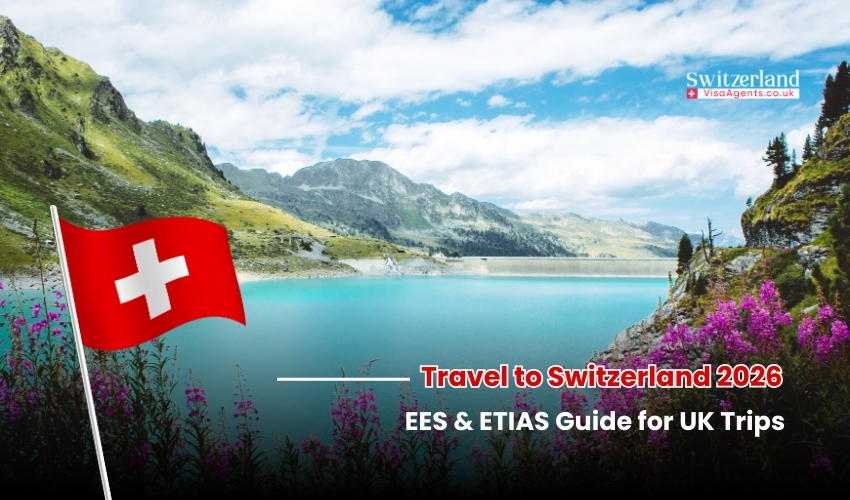
This guide will help you to know everything UK and other international travellers need to remember before travel to Switzerland 2026 with the implementation of the new European Entry/Exit System (EES) and European Travel Information and Authorisation System (ETIAS).
Whether you are applying for a Switzerland visa from UK or travelling visa-free, this blog will help you to explain how the new system works, why it is being introduced and how it affects your travel plans for 2026, along with practical tips to help you prepare with confidence for your Switzerland visa from UK appointment.
Switzerland may not be a member of the European Union, but it is part of the Schengen Area, which means border and travel rules often match those in EU countries like France, Spain, Germany, and Italy.
In 2025–2026, the Schengen Area introduces two major systems that will change how travellers enter and exit to travel to Switzerland 2026 and other Schengen countries, regardless of whether they are applying for a Switzerland tourist visa from UK or travelling visa-free:
It is important to understand these systems, which are essential for anyone planning a trip to Switzerland for purposes such as sightseeing in Zurich, skiing in the Alps, or attending events in Geneva and a cultural excursion to Lucerne.
Let us discuss the types of digital systems that have launched and made a mark in the visa sector. It is important to understand the two digital systems and how they will affect travellers to travel to Switzerland 2026 and applying for a visa for Switzerland under visa free rules. Some are as follows.
EES, or the EU Entry/Exit System, is a new digital automated border IT system that is implemented by the European Union for registering non-EU nationals that includes visa-exempt travellers and short-stay visa holders every time they cross external Schengen borders. It is planned to become fully operational by April 2026.
With EES:
This system helps to increase security, prevent overstays, reduce human error, improve security and border processing, and provide smooth records of movements. It is ideal for travellers applying for a Switzerland Schengen visa or travelling frequently between Schengen countries.
ETIAS is not a visa. It’s a travel authorisation required for citizens of countries that currently don’t need a Schengen visa for short visits — including the UK, US, Canada, Australia, Japan, and many others.
With ETIAS:
ETIAS was planned to launch earlier, but the full rollout is now expected in late 2026 after EES is fully implemented. This means that most 2025 and 2026 may still see transitional travel before ETIAS becomes mandatory.
ETIAS applies to travellers who do not need a visa for Switzerland, such as UK nationals who are not applying for a Switzerland tourist visa from UK.
Switzerland has several international entry points —Zurich, Geneva, Basel, and others have Schengen border controls that will be linked to the EES network.
When you enter Switzerland:
When you leave:
Because Switzerland shares the Schengen system with EU countries, the data is interoperable across borders; that means your stay count will be tracked whether you enter via Zurich, Paris, Barcelona, or Milan, whether you have a Switzerland visa from UK VFS or are travelling visa-free.
Also check, How to Apply for Switzerland Visa from UK? A Step-by-Step Guide
If you overstay your allowed days (usually 90 days in any 180-day period), EES makes it harder to avoid penalties because all travel data is centrally recorded.
ETIAS applies only to travellers who are visa-exempt. In other words, if you currently don’t need a Schengen visa for short stays (like UK, US, and Canadian nationals), you will need ETIAS when it becomes mandatory.
Countries that will need ETIAS include (but are not limited to):
If you currently do need a Schengen visa (for instance, Indian, Nigerian, or Pakistani citizens), you will not need ETIAS — your Schengen visa remains the travel authorisation for travel to Switzerland 2026
The Entry/Exit System is rolling out starting October 12, 2025, with staggered implementations across different Schengen borders — including Swiss airports, land borders, and train stations. By spring 2026, EES should be fully operational everywhere.
ETIAS implementation has been delayed but is currently expected to be mandatory by late 2026. Travellers planning trips after this point should check if their nationality requires ETIAS approval before travel.
It depends on your nationality:
YES (visa required) if you are from countries like:
NO (visa-exempt) if you are from countries like:
If you are visa-exempt, you’ll only need ETIAS (once it becomes mandatory) and EES will record your entry/exit.
If you do need a Schengen visa, you continue to apply for one like before — ETIAS does not replace that visa requirement.
Travellers who already require a visa such as travelers planning on applying for a Switzerland business visa from UK do not need ETIAS.
No — the rule remains the same:
90 days maximum in any 180-day period for short-stay travel (tourism, visiting family, business).
EES simply tracks those days more accurately. ETIAS is a pre-travel authorisation that lets you enter and start your stay.
If you overstay:
Therefore, it is important to track your days carefully and not overstay your welcome in Switzerland or in any other Schengen region if you plan to travel to Switzerland 2026.
Also check, How to apply for Switzerland Visa from Manchester | Step-by-Step Guide
Switzerland is known to have some of the major international gateways that includes:
Zurich Airport (ZRH)
Geneva Airport (GVA)
Basel EuroAirport (BSL)
Bern & Other Regional Airports
They are smaller airports specifically designed for specific routes and regional travel plans
Simultaneously, it is great for travellers who are looking for less congestion and faster processing. .
Note: It has been heard that all these airports are expected to implement EES and digital border processes gradually by late 2025, thereby making sure for faster and more secure border checks for non-EU travellers.
At first — possibly yes. Because millions of travellers will be submitting biometrics for the first time, some border checkpoints may have longer lines in the initial weeks after rollout.
But by late 2025 and into 2026, internal analysis from the European Border and Coast Guard Agency suggests that processing times will improve as staff become familiar and systems stabilise.
ETIAS is easy — but you must apply before travel if your country is visa-exempt and ETIAS is active.
Here’s how it works:
Most applications are processed in minutes, but some may take up to 72 hours. Approval is typically valid for 3 years or until your passport expires — whichever comes first.
Your passport should be valid for at least 3 months beyond your intended return date.
Expect to apply for ETIAS before travel once it’s active.
Continue applying through the Swiss Embassy, consulate, or visa application centre.
Travel insurance is necessary when planning to go to Schengen regions, thereby covering medical coverage of 30,000 euros. It is very necessary to get insurance done before travelling, as it may be checked at borders sometimes.
It is important to note and mark your calendars to ensure your departure date to avoid fines or bans, as EES keeps track of it automatically and may have serious repercussions in the future.
Overstaying your allowed 90 days can lead to:
EES makes overstaying harder to hide, because every entry and exit is recorded electronically.
As Switzerland comes under the Schengen region, rules of the EES system apply to them and across other Schengen borders as well, no matter whether you enter via France, Italy, Germany, or directly into Switzerland.
The EU and Schengen partners, including Switzerland, introduced EES and ETIAS to:
Note: For travelers, this is a great opportunity, as it provides fewer surprises and keeps track of records in sequence without any worry.
If you are wondering if to travel to Switzerland 2026 is easy then the answer is YES! But planning is essential. Since the implementation of new digital systems known as EES & ETIAS, travel has become safer, predictable, and smoother in the long run. Therefore, with a valid passport, correct authorisation, and keeping track of your travel dates, you can easily explore Switzerland’s mountains, lakes, cities, and culture with confidence and without any worry with your Switzerland visa from UK appointment.
Knowing EES and ETIAS during your Switzerland trip will keep you stress free no matter if you are going to Zurich for business purposes, Geneva for conferences, Lucerne for lake views, or the Alps for skiing — knowing EES and ETIAS will keep your trip 100% stress-free.
If you’re from a visa-exempt country like the UK, USA, or Australia, no. You’ll eventually need ETIAS once it’s mandatory in 2026. If you come from a visa-required country, you still need a Schengen visa. Therefore, if you are planning to travel to Switzerland 2026, keep this in mind, as it is necessary and can result in visa bans and more.
With a Switzerland visa from UK VFS, passport stamps are mostly being replaced by digital records — you may not see stamps anymore.
It is expected to begin in the year 2026 and until then, travel with a valid passport as usual.
Yes — ETIAS allows travel across Schengen states, including France, Spain, Germany, and Switzerland.
No—only visa-exempt travellers need ETIAS. Others still need a Schengen visa.
Yes — all Schengen stays count toward your total.
Yes — after ETIAS becomes active, UK citizens will need it for short stays.




 02084326004
 +447300463745