🌸 Easter Special: Switzerland Visa Slots Filling Fast – Apply Now
🌸 Easter Special: Switzerland Visa Slots Filling Fast – Apply Now
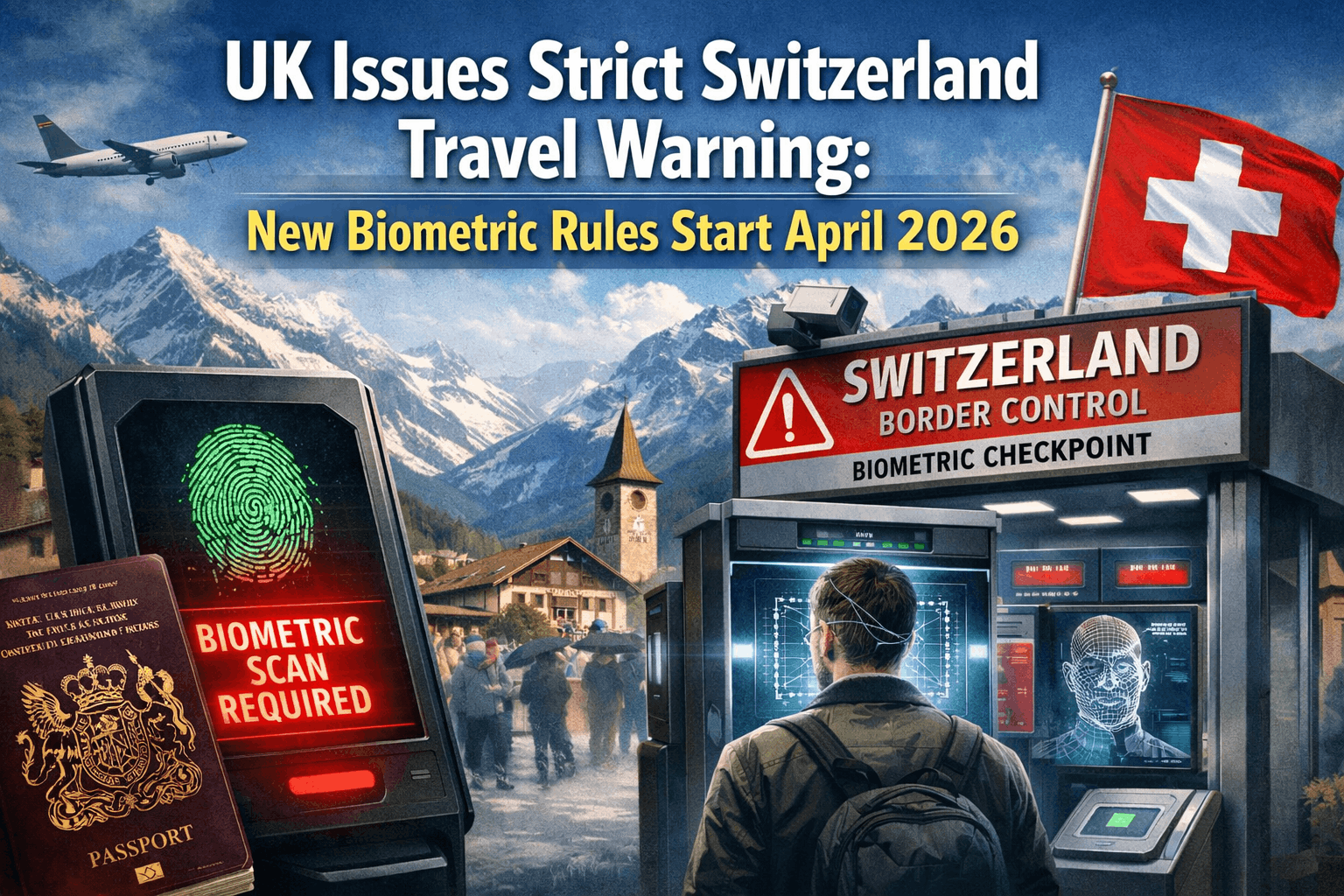
LONDON — The Foreign, Commonwealth & Development Office (FCDO) has issued an urgent update to its travel advice for Switzerland, warning British travelers to prepare for a “significant shift” in border procedures. The advisory comes as the Schengen Area nears the final deadline for the full implementation of the Entry/Exit System (EES) on April 10, 2026.
The new measures replace traditional manual passport stamping with a digital, biometric-based system, marking the biggest change to Swiss border compliance since the country joined the Schengen Area in 2008.
Starting next month, all non-EU travelers, including UK citizens, must register biometric data—specifically fingerprints and a facial scan—upon their first entry into Switzerland.
To manage the transition, Swiss border authorities have spent 18 months retrofitting major hubs. Travelers should expect to see:
Are you struggling to get the Switzerland Schengen visa appointment from UK? Then our agency in UK provides the best tourist, business and long stay visa for UK applicants you can here fill the appointment form and our agency will contact you.
The UK’s Foreign, Commonwealth & Development Office (FCDO) updated its guidance to warn travellers about possible longer border queues and new registration procedures during the early months of the EES rollout.
Authorities expect the first few weeks after launch to be the most challenging because travellers must complete biometric registration before their details are stored in the system. Once registered, future trips should be faster because the data will already be on file.
Officials also emphasized that travellers should:
The FCDO has highlighted several “friction points” that could lead to denied entry or significant delays:
| Requirement | Details |
| Passport Validity | Must be valid for at least 3 months after your planned departure date and issued within the last 10 years. |
| Biometric Enrollment | First-time registration is estimated to take 90 seconds per person. Longer queues are expected during peak times. |
| Overstay Penalties | The digital system flags overstays in real-time. Swiss authorities have confirmed that violations may trigger entry bans of up to three years. |
| Work Permits | British citizens working in Switzerland for over 90 days still require a cantonal work authorization, which will now be cross-referenced with EES data. |
While the EES focuses on the border crossing itself, the EU has confirmed that the European Travel Information and Authorisation System (ETIAS)—a pre-travel digital permit similar to the US ESTA—is scheduled to launch in late 2026.
Additionally, Switzerland’s planned electronic identity (e-ID) platform, which would allow “walk-through” arrivals for repeat travelers, has been postponed to December 2026. Until then, physical biometric registration at the border remains mandatory for all UK arrivals.
Travelers are encouraged to arrive at airports at least three hours before their flight and to ensure all digital documentation is easily accessible. Carriers like SWISS and easyJet are currently urging passengers to use app-based pre-registration where available to streamline the process before reaching the gate.
Based on the latest FCDO updates and the upcoming Schengen border changes, here is a comprehensive checklist of the documents required to ensure a smooth entry into Switzerland.
Border officers may request the following to verify the purpose of your visit:
Keep a digital folder on your phone (available offline) containing copies of all the above documents. If you are traveling as part of a tour group, ensure your tour operator has provided a detailed itinerary, as this can serve as additional proof of your travel plans.




 02084326004
 +447300463745